



This is actually a question many people answer incorrectly 😅
A lot of learners study plenty of vocabulary and grammar, but when they find themselves in real English conversations, they still end up answering the wrong question.
Usually, the problem isn’t that their English is bad. It’s that they didn’t fully understand what the other person was actually asking.
Today, let’s look at two very common English questions that are often misunderstood 👇
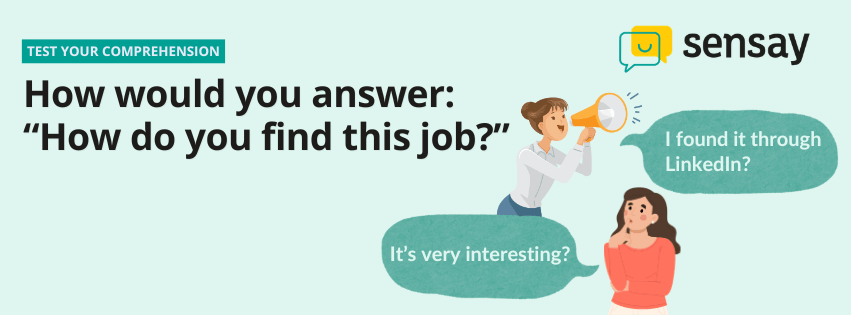
1. “How do you find this job?”
When many people see the word “find,” their first instinct is to think about “finding” something.
So they answer:
❌ “I found it through LinkedIn.”
But in many situations, this question is actually asking:
👉 “What do you think about this job?”
Here, “find” means: “to think” or “to feel about something”
NOT: “to discover”
So more natural answers would be:
✅ “I find this job very interesting.”
✅ “It’s challenging but rewarding.”
So how would you actually ask: “How did you discover this job?”
People would usually say:
👉 “How did you find this job?”
or
👉 “How did you hear about this job?”
Then you can answer:
✅ “I found it through LinkedIn.”
2. “Who are you flying with?”
Many Asian learners first assume this means:
👉 “Who are you traveling with?”
So they might answer:
❌ “I’m flying with my family.”
But in many everyday American English conversations, “Who are you flying with?” most commonly means:
✈️ “Which airline are you flying with?”
Because in English: “fly with + airline” is a very natural expression.
So more common answers would be:
✅ “I’m flying with EVA Air.”
✅ “I’m flying with United Airlines.”
So if someone really wants to ask: “Who are you traveling with?”
Americans are more likely to say:
👉 “Who are you traveling with?”
or
👉 “Are you going with anyone?”
The hardest part of English isn’t always vocabulary
It’s:
👉 understanding the context correctly.
Many English words can have completely different meanings depending on the situation.
For example:
- find = discover
- find = think / feel
So if learners rely only on literal Chinese translations, misunderstandings can easily happen in real conversations.
Real English speaking is about understanding
Many students actually know English well, but they:
- translate too directly from Chinese
- focus too much on word-by-word meanings
- lack exposure to real conversation situations
In real English conversations, people are not only thinking about grammar. They’re also testing:
👉 whether you can quickly understand what someone truly means.
And that’s also why Sensay is not just about pronunciation practice.
We also want to help learners build:
✔ real English comprehension
✔ faster response skills
✔ confidence in real communication through authentic speaking practice and interaction.